Best Psychic & Clairvoyant
Thanks to clairvoyance nowadays, you can easily find out a lot about your past life, your present life as well as about major events that may happen. The number of people who turn to clairvoyance is far from negligible because of the many benefits that can be found there. Unfortunately, there is a problem. It is not always easy to find the ideal psychic, the one who really understands the divinatory arts and who will be able to predict your future perfectly. If you are looking for the best psychic in New York who will be able to solve many of the problems you are facing, then I offer you my psychic services in United States. I will be able to guarantee you exceptional results, no matter which formula you choose.
Psychic in United States using the most effective techniques to predict situations in your life
I am an psychic in United States with almost 20 years of experience in this field. If you are looking for a psychic in United States who can address your emotional, professional or financial concerns, I recommend you contact me. If it is convenient for you, I can also offer you my psychic services by means of a clairvoyance phone call. The number of professionals who have this gift is already quite limited, and if you have to search for serious psychics, don't be surprised if you get discouraged.
In order to distinguish myself from anything you may have encountered before, I will be able to give you a real understanding of the situation you are experiencing without you having to describe your life to me. I am ready to answer all your questions and whatever is on your mind. My gift is focused on many aspects of the lives of those who trust me, as I am a psychic in United States who can provide multiple services. Not only can I offer you services in astrology, but my offerings also extend to psychic reading. I can also be your psychic, or offer you clarifications in numerology or even dowsing.
I am a psychic in United States who offers you serious consultations and at a lower cost
Even if most people are not in favor of clairvoyance, know that you will get a lot of benefits by consulting a psychic like me. It is normal that you may not have a clear picture of many aspects of your life. Events of the past as well as the present can however have an impact on your future. That's why, by referring to a psychic in United States like me, you will be sure to enjoy sincerity on all levels to better understand certain phenomena that make you confused.
It is not easy to find a psychic of good faith, many today lack common sense and will take advantage of your ease to accept things. Don't lose hope, because with my skills as a psychic in United States in practice for twenty years, I knew to put the satisfaction of those who trust me in priority. There is nothing better than an honest psychic in United States who knows how to translate the real situations you are going through. Besides, it would be sad to think that you are the only one on earth who is going through troubling situations. With my assistance, you will find meaning in your life.
Do you need to consult a psychic or a tarot reader in United States, US?
Tarology is one of the divination techniques contained in psychic reading. Thus, I use tarot cards. With tarot cards for example, I can give you predictions depending on the symbol of the cards. However, I do not use the Tarot only for my predictions. Indeed, I can also use it to give you a clear vision of the situations in which you find yourself. You will be able to know yourself better. I have spent most of my life learning how to read and interpret cards, because I always want to offer to those who trust me, quality services.
If you want to contact best psychic in Los Angeles, who masters her art to perfection, be relaxed. You can reach me directly by email or by phone. Nevertheless, many prefer physical meetings and I am open to you. My services are available to all consultants who want my assistance, whatever the situation they are dealing with. If it is impossible for you to travel, I will be able to make the journey for my offers to find you.
Also, I am available and accessible via chat communication, always with a view to providing you with my quality services that will change your life. By contacting me online via chat for example, you will be able to gain not only in efficiency, but especially in time. Just like by chat, contact via telephone is also a good option to offer you my expertise without having to travel if you are not in favor of a face-to-face consultation.
I propose you to discover what is linked to your date of birth and the number of your life thanks to the numerology that I practice
I will be able to offer you my services in numerology as well as in astrology. If you didn't know it yet, your birth year hides mysteries about the person you are. The sum of all your birth numbers is represented by the "Life Path". A particular energy is attached to each number and symbolizes an ability that impacts your personal journey. By adding up the days, months and year of your birth, I will be able to show you the life path that numerology grants you.
Numerology is a divinatory art based on the deep examination of a letter or a number. Not only will I be able to carry out a numerology of a date, but I will be able to do the same for your first name. According to these two parameters, numerology will assign you a number between 0 and 9 which will embody a vibration. This one will be able to define the traits of character which are attached to you and even make it possible to read your future. So, what will your future be made of? Should you expect an evolution of your career? How will your life evolve? What are your health concerns? Will you travel? What will happen to your friendships and romantic relationships? What is your mood today? Here are many questions to which I will be able to give you answers if you contact me by mail, by phone, or if you wish a consultation by chat.
Just like the signs of the Zodiac which can be refined by means of the decans (each third of sign) as well as thanks to the ascendancy, numerology can also be broken down into many numbers. It could be the number of expression, the active number, the hereditary number, the intimate number, etc. If you want to know your number and discover your real personality or what the future holds for you, contact me without further delay. I will be able to intervene in a direct way in order to make you reach results in a lapse of time. I am a psychic in United States who offers you the opportunity to deepen your knowledge.
Some forms of clairvoyance that I offer you
First of all, I would like you to understand that there is a certain difference between a psychic and a medium. A psychic like me, for example, is able to perceive in the past, in the present and to have visions of the future. However, a psychic has a rather special role. He is an intermediary between you and a being who is no longer of this world. Most of those with a rational mind will turn to astrology or numerology, while those who wish to be discovered by the cards will lean much more towards an intuitive psychic in United States who has mastered tarology. However, do not be inattentive. Don't trust psychics in United States who are much more steeped in dubious beliefs such as magic, witchcraft, hexing or negative energy. In this context, we speak more of charlatans than of psychics.
Find an experienced psychic in United States to get good predictions
Your psychic in United States should be able to decipher you. If you want to get better predictions, it is important that you let her speak for you. If a psychic in United States is not able to tell you about the events in your current life (the present), and the events that have already taken place (your past), don't be sure that she will be able to see you clearly as you should.
This is the main reason why I have to make a first contact with you. I do my best to make sure that the person in front of me can feel totally relaxed and open. Also, if I have taken the time to explain the different branches of clairvoyance that I touch, it is because it is important that the person who consults me knows everything about my working method. Generally, before I actually get into the session itself, I try to ask you your year of birth on the day you make the appointment or at the time of the consultation. However, beware of psychics in United States who use some not-so-clean or downright obscure methods. For example, some psychics in United States will be able to tell your future from coffee grounds or ink stains. You can even face psychic readers who predict the future with runes.

All I can tell you about the popular free psychic reading packages
There are several packages that will be offered to you if you use the services of an psychic in United States. They can even be free of charge and you can get expert advice in the field. However, even if you have your own choices, ideally what you are offered will meet your expectations. The choice of the ideal formula depends on the information you submit and which gives you the most accessibility.
The free mail formula in United States I offer you
As it is often the case on several sites, I propose you a formula of consultation which will be held by e-mail. It is very convenient and hassle-free. All you have to do is to make a list of questions and send them to me. I will send you in a short time elements of answers after having taken the trouble to study your situation.
My analysis is usually based on real drawings and apprehension of the person you are. Others may use dubious techniques to offer you quick answers that are not based on truths that affect you. In any case, I make sure that those who contact me in this way can have the beginnings of an understanding of the issues that affect them. Once you are ready to take part in a paid consultation, even more revelations will come to you.
I am reachable by SMS or by phone: another formula
If you wish, I can propose you my best services of clairvoyant in Chicago by phone or by SMS. Afterwards, you will have to turn to my paid service in order to enjoy even more my quality predictions. Thus, I can make you benefit from a first free consultation so that you judge the satisfactory results. By email, the principle is not so different except that in this context, you will have to make a commitment by leaving your bank details. Once you have had a free period of my psychic services in United States, I will send you an invitation to continue the experience.
However, I recommend you to be very careful with this package, because often with other psychics, it is not so easy to cancel this subscription as soon as you sign up. Plus, it's easy to come across psychics who aren't effective enough. Even if the session is free, you will still have wasted your precious time. The good news is that I can save you a lot of heartache if you trust me.
The online draw formula
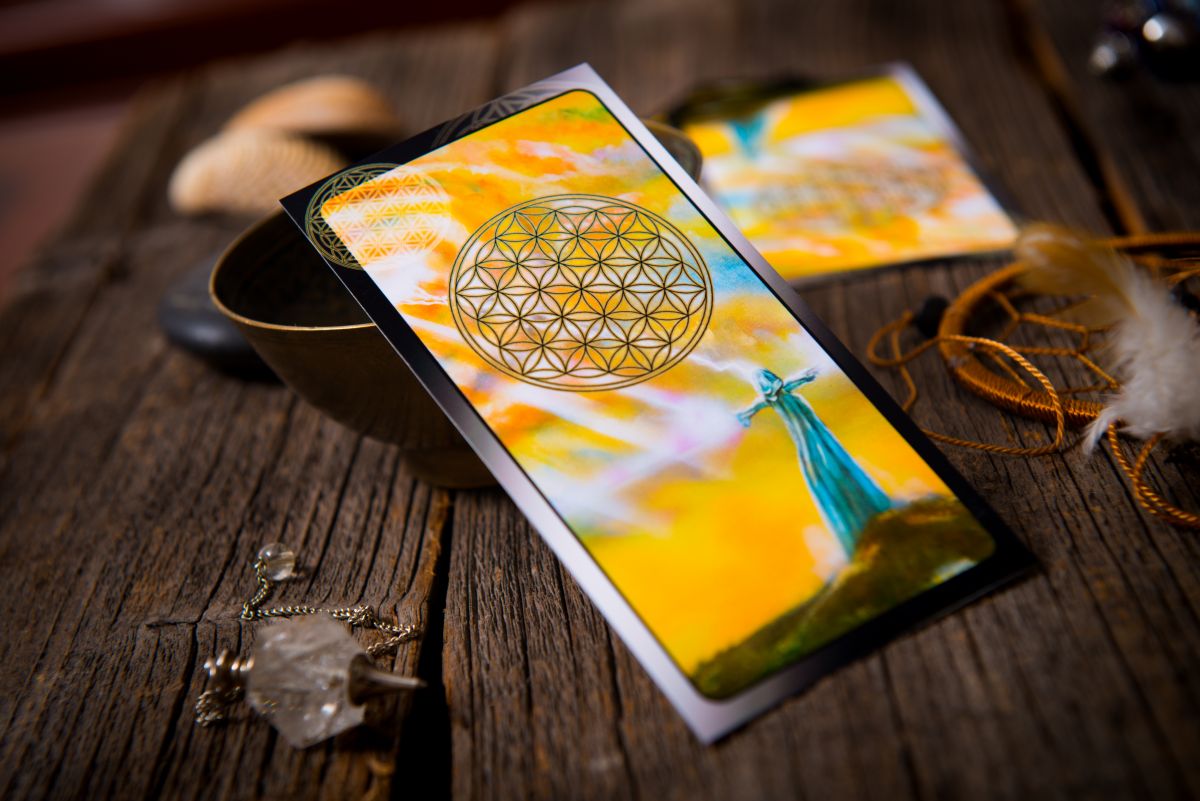
With this technique, you can make automatic draws from psychic websites. With these draws, it will be possible for you to get answers to many of your concerns. By means of algorithms arranged as tarot card draws or even oracles, the consultant will be able to take part in the session. You may also come across rune or crystal ball readings.
What I recommend to you however is the formula of psychic services by e-mail which will make you enjoy serious contributions thanks to a medium who masters his art and who will take time to study well the questions which torment you. This is how real answers will be dedicated to you.
Basically, I deal with several essential themes of life. It can be about meetings with your entourage or strangers, your love relationship, your financial situation, friendships, as well as many other areas that relate to your everyday life.
Some opinions about my psychic consultations by phone
My first telephone consultation
I am still in a state of surprise. I still can't believe that there was so much I wasn't aware of. My professional life has paid a high price recently, not to mention my instability in my relationships. Using the services of this psychic has done me a lot of good. Today, I am totally moved for having understood certain important aspects of my life. I am now ready to support certain events that will happen soon. The most important thing for me is to be able to put my life in order, to start again. And all this would not have been possible without the help of this psychic.
enora_guillard
5/5
Finally a meaning to my life!
I was able to reach her via email just to try her out. I came out completely renewed. I've been looking for a serious psychic for a long time and I've only come across scammers who have really pissed me off. Everything she revealed to me was just amazing. I felt like she had known me forever. There were several situations that I was going through that kept confusing me. I had so much uncertainty about my life and my relationships with those around me. This psychic that I contacted really helped me to understand the meaning of my life. I especially liked her professionalism and her honesty. It is true that from the beginning I had many doubts, and what do you want? I was so tricked that it became difficult to believe in those who believe they have mastered the art of divination. Today I can recommend this psychic and assure you that she will only predict everything about your future. I can't doubt her gift and this is the first time I am so satisfied. Thank you and don't forget to follow her advice to the letter!
OwenGallois
5/5
Tarot reader extraordinaire
It all started when I came across this article. I was a bit reluctant, but my curiosity led me to contact her for a chat. She wasted no time in getting to the heart of the matter, explaining to me concretely the problems that were plaguing my life. I had suffered a lot up to that point and I really needed to consult an expert in tarology who could read events in my life. I recommend this psychic who will be as helpful as she was to me. I am no longer afraid of certain situations and I have become more daring. It really feels good to understand your personality!
GerardAssia
5/5
Finally, answers to my questions!
For almost 10 years now, I have never been able to keep a steady business. I often find myself in doubt, losing confidence in myself, and I really have trouble building myself. I had no answers to many questions, and my choices always ended up being wrong. Meeting this psychic opened my eyes to many things that were holding me captive from lack of confidence. I can't explain how much I have gained from her services. All I ask is that you give it a try.
lounajosse
5/5
Enriching consultation
I would especially like to say thank you to this lovely psychic who offered me truly exceptional services during our discussion. Not only did she make me feel confident, but she also gave me a clearer perception of the trials I am going through in my life. If you want to enjoy a real consultation, I just ask you to contact her. She has a real gift and really knows what she is talking about. It's a far cry from the bullshit I've been hearing for many attempts on the internet. She really described me and just with my birth date, I really don't know how she could bring out all these realities that I kept deep inside me and didn't want to accept.
GossetLya1999
5/5
Subliminal gift
It's really beautiful what she does. I still can't believe it. She has a totally subliminal gift. She was recommended to me by a friend and I can assure you that she was a real gift to me. I was often prejudiced about the predictions of psychics, but this time I felt like I was an open book to a stranger who had known me since I was a child. She gave me answers that I didn't expect at all. I found a new hope that had been buried by the many disappointments I had to endure in my past. Thank you so much.
gomezolivia
5/5
Accurate predictions
Thank you very much for your time. You helped me to clear my head. I was totally confused and disoriented. She didn't even need me to express my pain to understand my situation. Her predictions were so accurate and precise that I wondered if you were my mother. I admire her enthusiasm and her honesty, even about situations that I found difficult to accept. You brought up some real issues that have plagued my past and are affecting my life now. I can't thank you enough for the assistance you have given me. I have been hoping for a long time that someone would tell me what to do. I was at my wits' end. I have gained a lot by using your psychic services.
PatrickGutierrez51
5/5
Serious psychic
I didn't know that there were still serious psychics on the internet. I've been taken advantage of a lot by charlatans who only care about their own pockets and not about my situation. You stood out from the crowd. Thank you for taking so much trouble to describe everything that is holding my relationships back. There are many things that I can review to ensure a peaceful future. Thank you so much for the predictions.
correleo
5/5